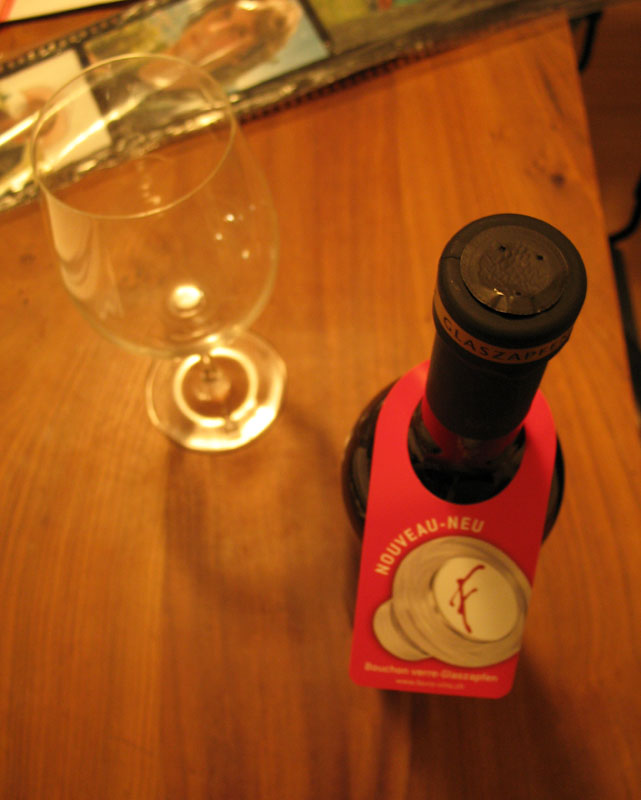
 Three years ago the wine world was startled by the arrival of glass corks, which promised to remove forever the problem of "corked" wine, whose smell and taste are unforgettably unpleasant. The new glass corks, called stoppers by manufacturer Alcoa, made the news, then little was heard about them after their 2004 debut. Some wine producers in Switzerland were said to have bought them.
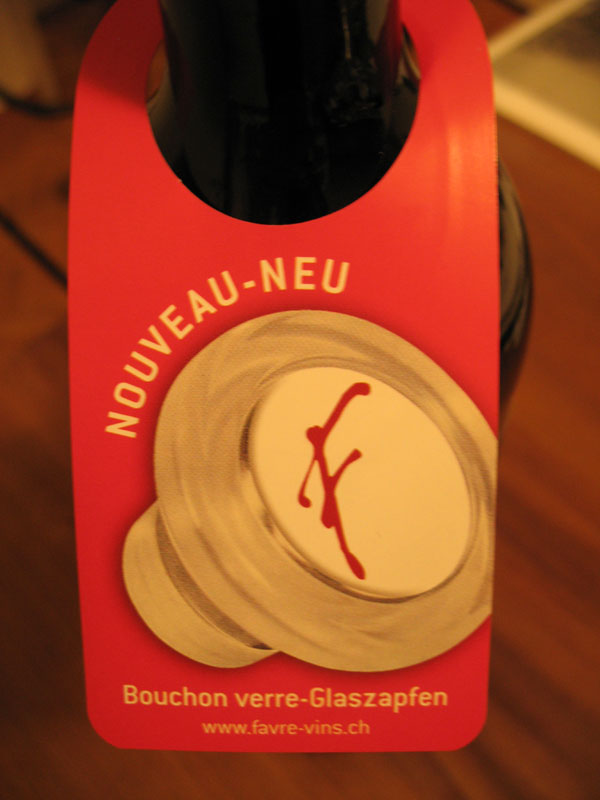
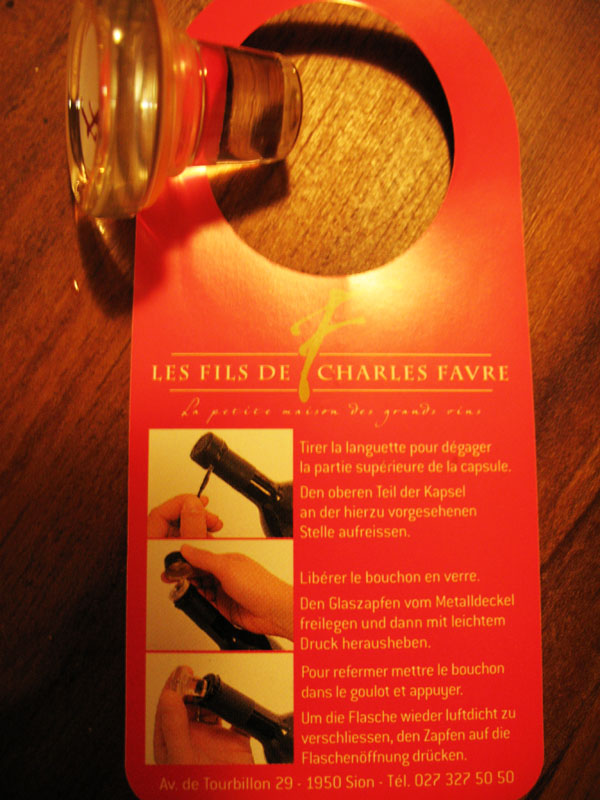
This week they have made a sudden appearance on the shelves in Coop supermarkets in Vaud, with bright red "new" collars on the necks of several bottles from the Les Fils de Charles Favre winery in Sion. The Favre family is well known for its wide variety of grapes and wines, and for some very good quality wines, which have won several awards. The Hurlevent line has a good reputation for interesting and unusual wines from the Valais, such as Amigne and Humagne blanc.
Les Fils de Charles Favre was the first winery to try glass corks, using them when it bottled a vat of Gamay in April 2005.
So what was a Favre family Hurlevent Pinot Noir doing on display with a glass stopper this week? Marianne Gaillet at the winery tells me that wines with glass corks have been doing very well, particularly in restaurants, where the combination of easier opening and no possibility of corked bottles contributes to their success. The winery now has five wines that are bottled this way.
Quite simply, the large Coops are now pushing them.
Impossible not to test the system, so I tried it out Thursday night.
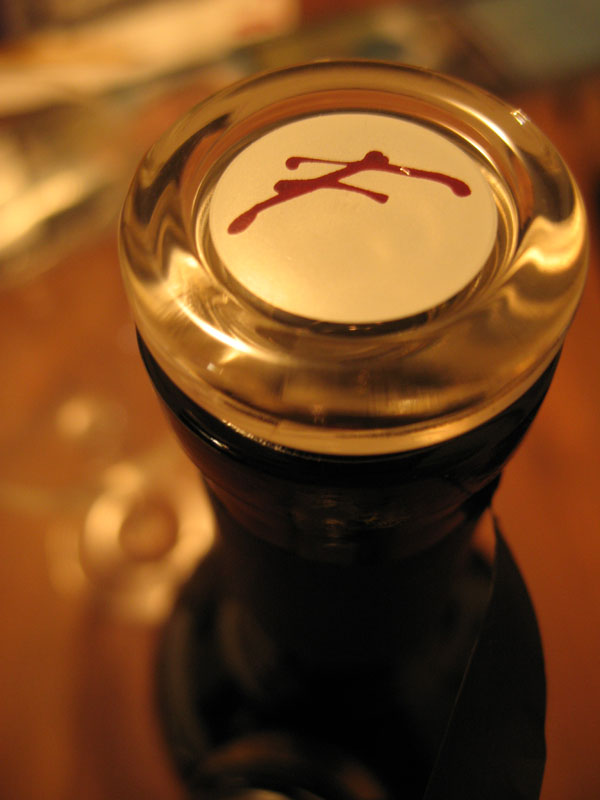
First reaction: it is elegant, with a slightly unexpected shape to
the top of the bottle and the glass top when you remove the aluminum
cap is attractive. It is very easy to open with just a little pressure
from your thumb, so no corkscrew is needed. Compared to a screwtop cap,
it is upperclass. And the glass cork itself is a lovely item, shorter
than natural corks, with a pleasing design. It can be recycled.
Using a corkscrew is fun for some of us and I wouldn’t be ready to give
up that part of wine drinking, but there is probably room for both
kinds of bottle stoppers in our lives.
Alcoa’s development manager, reported Swiss wine writer Philippe Margot
in 2005, said that the company had no intention of trying to replace
natural cork in the world’s wine bottles, with 22 million a year
expected by 2010. The market was big enough, and the quality of cork
was falling due to over-production, so the company thought it was worth
going for a share of the market.
The glass corks cost about CHF40 centimes each, which is lower than
the price of a good quality natural cork, with Alcoa saying it is aimed
at the good to high quality wine market.
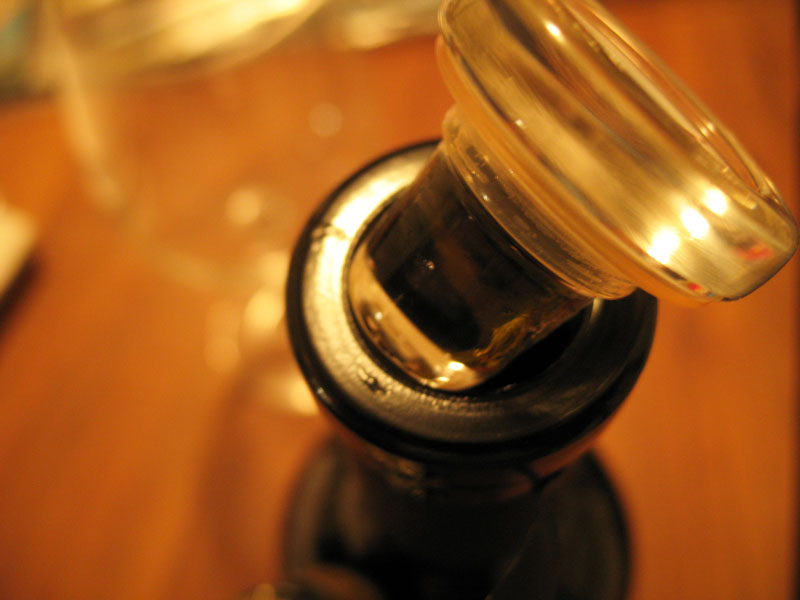
The only real problem I had during my one-bottle trial was ignoring
its sellling point that you can re-stop the bottle by putting the glass
cork back in, to save what you don’t drink. It’s easy to do, but I
prefer to use a system that removes the air first.
It didn’t seem right to just recycle my attractive glass cork so quickly, but I imagine I will get over that.