Matisse the master, with his friends
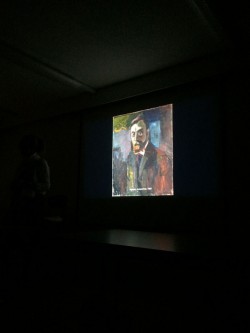
GENEVA, SWITZERLAND – The Gianadda Foundation in Martigny is pulling in crowds for its major 2015 exhibition, “Matisse in his time”, a very accessible art show for all levels. The collection of art is wonderful, from Swiss public and private collectors and the Paris Pompidou Centre. The art centre notes that
“the main idea of the exhibition is to show Matisse’s work in a new light: that of the painter’s relationships and exchanges with fellow artists, based on historical documents, letters and correspondences. The result is original and new insight on 20th century masterpieces from Matisse but also from Picasso, Gris, Braque, Derain, Bonnard and others.”
I particularly enjoyed seeing works by Braque, Derain and Picasso alongside Matisse’s works, helpful for understanding each of their paintings. We see his long friendship with Albert Marquet through the angle of subjects they both painted, notably their very different coffee pot still-lifes from 1902, with Matisse’s focus on light built around the relationship between colours, while Marquet’s is in the tradition of 17th century still-lifes.
Story continues below
A set of 20 Jazz original cutouts, smaller than I expected, is wonderful to see, marking a period of transition. They were created in 1943-44; the artist stopped painting with easels in 1948, giving himself over completely to “drawing in colour” with cutouts. The Gianadda exhibition notes of this new work of Matisse’s that “the collaged paper cutouts were translated into ‘pochoirs’ (stencils), which were then printed and published in an edition of 170 in 1947 by Matisse’s friend, the editor Teriade”:
“The subject matter … in Jazz ranges from the circus to mythology to nature. Matisse viewed Jazz as a sort of autobiography and as a ‘chromatic and rhythmic improvisation’. The title Jazz evoked for him the idea of structure of rhythm and repetition broken by the unexpected action of improvisations. The artist wrote to a friend in 1947, ‘There are wonderful things in real jazz, the talent for improvisation, the liveliness, and being one with the audience.'”
Exhibition details
If you’re planning to go, allow a couple of hours so that you can linger long enough to escape the occasional press of crowds; the exhibit is popular with bus tours. If you love dogs, you might want to include a visit to the St Bernard kennels next door. The lower floor of the Gianadda also has a fine private collection of early cars. On the same level you’ll find a beautiful series of photographic portraits of famous 20th century artists.
The Matisse show runs until 22 November and is open seven days a week from 09:00 to 19:00. Entry fee: CHF20 with discounts for seniors and children.
The paintings fall into nine categories organized chronologically, from his early days studying with Gustave Moreau to “designing in colour”, his famous cutouts – the bright, late works of a man whose professional life covered nearly seven decades. My personal favourites are his early and late works, simply for his sense of colour, but having the chance to compare some of his middle-late paintings to those of close friend Picasso, the same subjects, was enlightening.
A special treat during my visit was viewing the paintings while an orchestra warmed up for an evening concert, from the dissonance of horns and keyboard working separately accompanying some of the Fauve period art to the near-concert symphonic sounds.