New Swiss diploma takes note of changes
GENEVA, SWITZERLAND – If you’re dreaming of being a sommelier, standing with a neat napkin over your arm and pouring your favourite bottle of wine while nipping a bit in the back room, you’re stuck in a 1950s movie.
The World’s Best Sommelier 2013, Paolo Basso from Ticino, recently showed a crowd of wine experts at Changins, the wine university near Nyons, just how daunting his job really is.
World’s Best Sommelier one of the professors
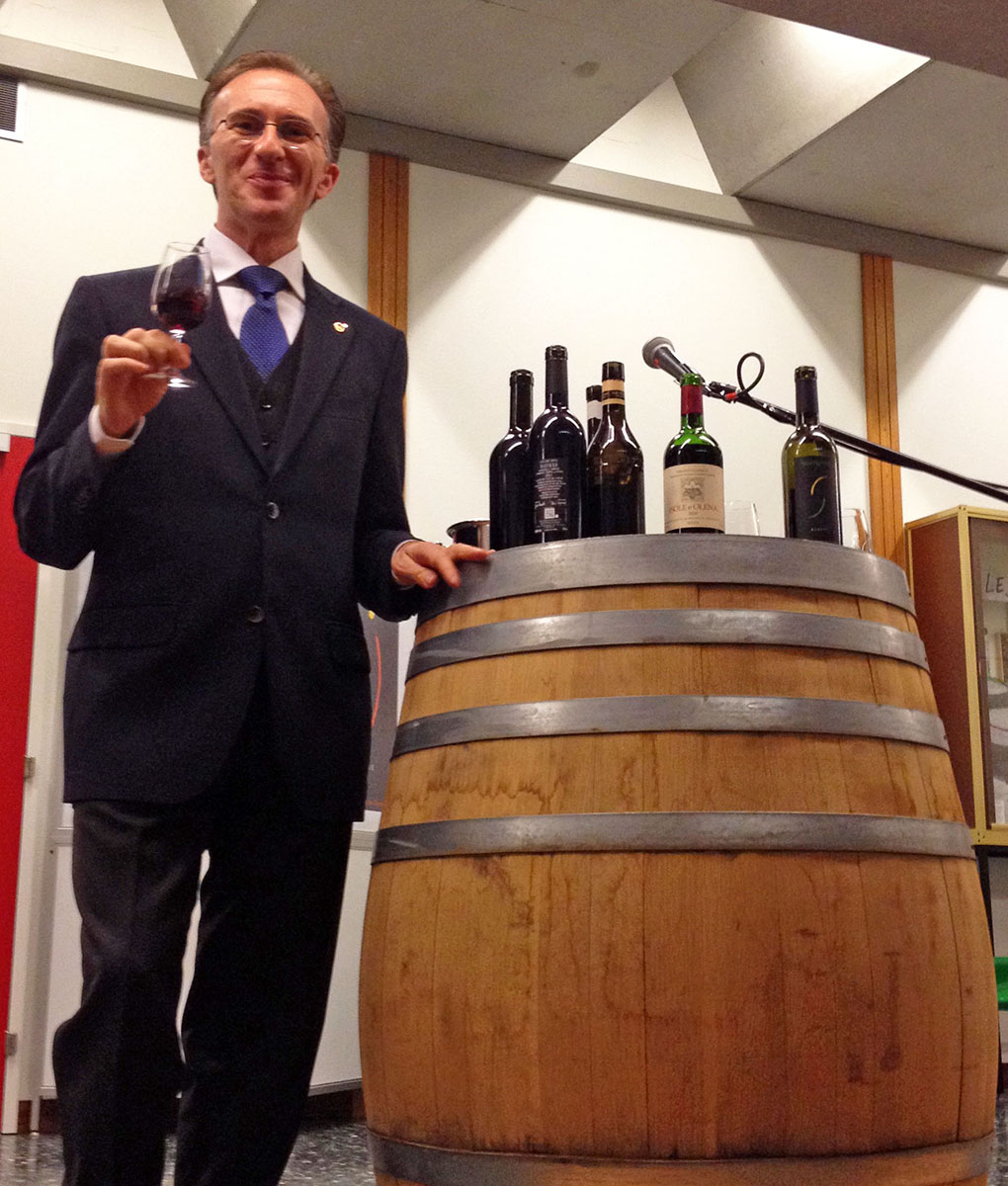
Basso was there not just to amuse but to help present a new diploma for sommeliers that aims to set the world standard for the profession. He is one of the highly valued professors at this school where most top Swiss wine producers learn the basics of their trade.
Basso presented a film of the March 2013 finals for his title in Tokyo. The audience of Changins students and guests who work in the wine world are knowledgeable about the business, but when Basso shared some of the questions that he had been asked in March during the theory test, and the level of knowledge he had to display in the practical exam to win his title, the audience groaned with appreciation.
Changins houses a popular wine school for amateurs, but its main function is as a university for specialized diplomas that awards bachelor and masters degrees in the vine and wine fields.
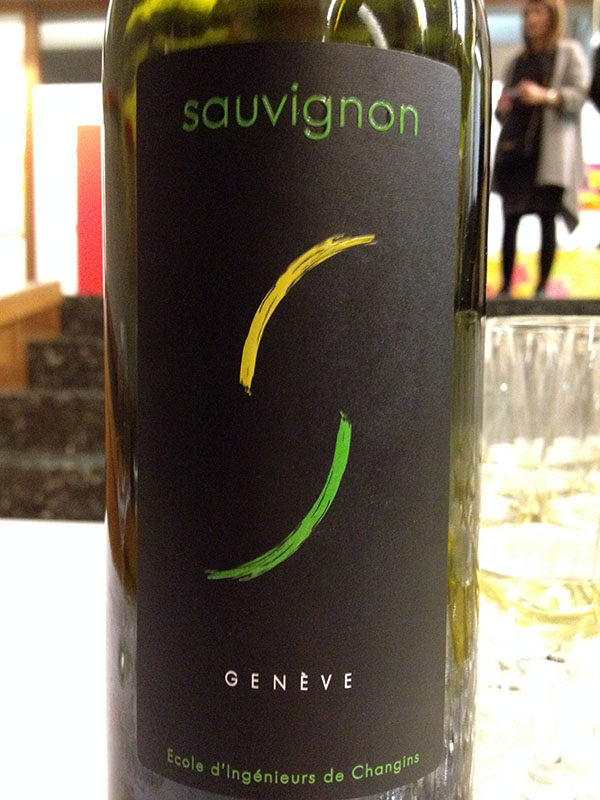
It used to be known as the Changins Western Switzerland University for Engineers until January 2014, when it officially became simply “Changins” to reflect a widening role.
It is also very closely linked to the Swiss federal agricultural research station for wine grapes.
What the new diploma means
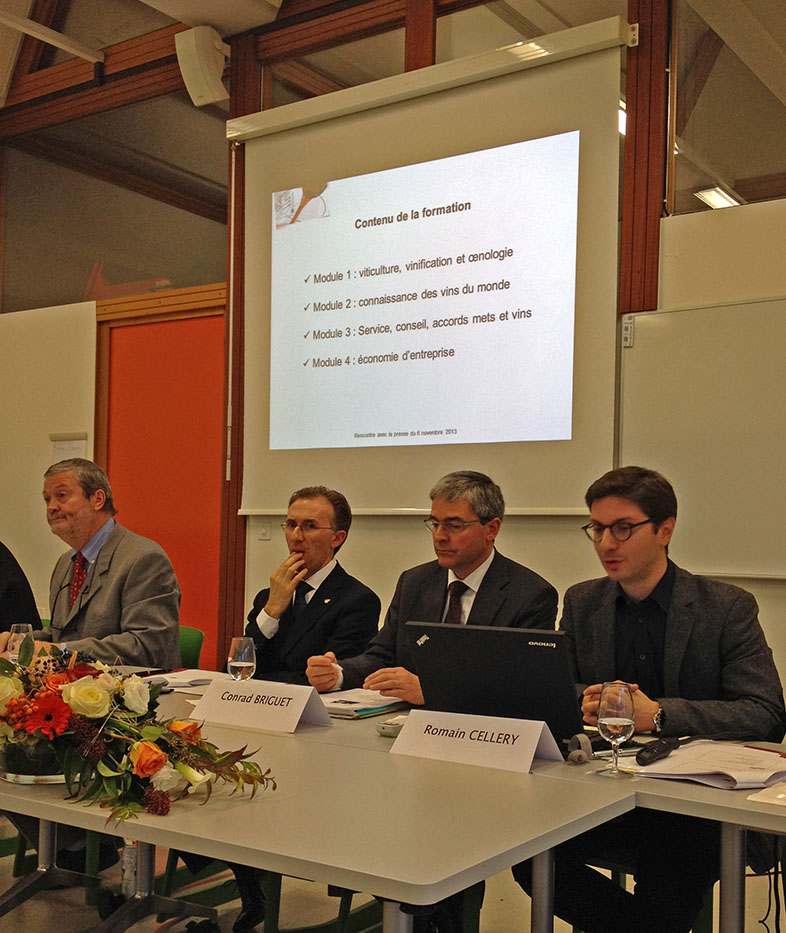
Changins has offered a diploma for sommeliers as part of this overall system but now it is home to a new national Swiss programme that will lead to a federally recognized brevet. This is a diploma to provide sommeliers with their own higher education certification, in the tradition of the best world-class Swiss hotel education programmes.
Three private diplomas are currently available to sommeliers in Switzerland. The three schools that offer them, one of which is Changins, worked together for four years to present a project to the federal government for a high-level diploma. They wanted a programme and diploma that would be recognized throughout the country and that would carry weight outside Switzerland.
The federal Education Department gave the project a green light in December 2012. The first students started the course in January 2014 and the first examinations for the diploma will be given in 2015.
Internationally, private programmes exist for sommeliers but there is no official national or international diploma that is widely recognized. French hotel schools offer sommelier training, as in Switzerland.
A high percentage of the sommeliers in Switzerland, at the top level, are foreigners, mainly from Italy and France. People who are already working in the industry will have the chance to qualify for the diploma, but they will have to complete some coursework that will include, for example, a good level of knowledge about Swiss wines.
What the 21st century sommelier needs to know
The work of sommeliers has changed in recent years, say those behind the new programme, and in a top-class restaurant or hotel today a sommelier needs a high level of knowledge about wines, but also needs to understand how wine is made and how hotels, restaurants and wineries are managed.
The new programme is offered in French, German and Italian and requires three years experience. It’s a six-month course (260 hours) and is followed by an examination that covers three main areas:
- viticulture, vinification, oenology
- knowledge of wines of the world
- service, advising, food and wine pairings.
The top of the top for sommeliers
 Basso was twice the runner-up for the world title, in 2000 and 2007. This time, with his wife as his very demanding coach, he began spending one to two hours a day to prepare, three years before the competition. A year before the Tokyo finals he began spending three hours a day, not easy for someone who is self-employed, he points out. The investment was substantial: scores of books, wines that he had to purchase and ship in order to become more familiar with them.
The candidates had 60 minutes to answer 70-80 questions for each round of the competition in March in Tokyo. “What’s the chemical formula for malolactic fermentation – how many of you can answer that right away?” he challenged the Changins crowd.
Few, very few hands went up.
“What is Sotolon? We had to know history – what was the first DOCG in Italy?” The crowd sank a little with each question – what are all the Peloponnesian appellations, the names of grape varieties grown in each ward in South Africa, the new 2012 appellations in Niagara, the name of undiluted saké.
The killer question: how many times are vines and wine mentioned in the Bible? Good luck; I’ll give you a couple of days to work it out, or share it here in a comment if you have the answer!
Leave a Reply
You must be logged in to post a comment.